

Gold once reigned supreme as the foremost signifier of wealth, success and value. The nature of Money has changed throughout human history, from seeds, grains and animal pelts to gold, silver and the green likeness of Benjamin Franklin. Today, with the rise of Bitcoin and various other virtual currencies, it can be easy to forget where we have come from.
All of these currencies share the same purpose, to enable trade and commerce in a fair and standardised way. Today we will look into the limitations that led gold and its predecessors to be supplanted by more effective forms of currency.
Trade Throughout History
The art of trade was a vital aspect of early human society, with civilisations forming in central and coastal areas where trade was most viable. Strong trade links meant increased prosperity for early human settlements, with evidence of trade covering long distances between cities in Mesopotamia and the Indus Valley recorded more than 5,000 years ago.
The economies of today rely on the exchange of money for products and services. Before the development of money, people would barter to obtain the goods and services they needed. Two individuals, each possessing some goods the other wanted, would agree to trade. Rudimentary bartering, however, failed to provide the transferability and divisibility that makes trading efficient.
For example, if a farmer has cows but needs grain, they must find someone who not only has grain but also the desire for meat. What if that individual finds someone who has the need for meat but no grain and can only offer potatoes? To get meat, that individual must find someone who has grain and wants potatoes, and so on.
Challenges of Bartering
The lack of transferability of bartering for goods made the current system untenable, and greatly inefficient. But there ahead lies further challenges for the farmer in his search for grain; even if they find someone with whom to trade meat for grain, they may not consider a sack of grain to be worth a whole cow. Such a trade requires coming to an agreement and devising a way to determine how many sacks of grain are worth which parts of the cow, with different cuts of meat garnering more grain than others.
The key issue remains a lack of consistency across trade, with the bartering process creating a confusing system which is difficult to manage. Initially, commodity money looked to solve these problems. Commodity money is a type of good that functions as currency.
The Introduction of Currencies
The first official “mint” currency was made in Sardis, Turkey – in 600 BC. The ‘Croeseid’, named after King Croesus of Lydia, is credited as the first example of the use of silver and gold as a means of trade. Early currencies like the Croeseid were limited in that they were used locally, though other examples of coinage began to appear across different civilisations.
However, in many places, gold was not readily available and in short supply, so wealth was defined by different means in places where gold was lacking. In the 1600s and early 1700s, for example, colonists in North America used animal pelts, dried fruit and vegetables in transactions. Having generally accepted values, these common goods were used to buy, sell and support a fair system of trade.
Commodities were defined by certain characteristics: they were widely desired and, therefore, valuable, but they were also durable, portable, and easily stored.
The Rise & Fall of Gold
For a time, gold became the foremost tool by which trading, buying and selling could take place. Interestingly, unlike the animal pelts and dried foods (which can be used for clothing and food, respectively), gold is precious purely because people wanted it. It is not necessarily useful—you can’t eat gold, and it won’t keep you warm at night, though it has succeeded in maintaining a perennial hold on the minds and hearts of man since antiquity.
This relationship between money and gold rooted itself deeply in early societal perceptions of what constituted value. So much so, that even the promise of gold, printed on paper, began to constitute value in acts of trade. However, the rise of paper spelled the end of gold as a most valued trade resource, as it became more desirable than the gold it promised.
Introducing Paper Money
Our infatuation with paper money as the definitive symbol of wealth and financial success came from humble beginnings. The earliest iteration of paper money was nothing more than a piece parchment which promised the exchange of an agreed sum of gold at a more agreeable time, these were called IOUs.
Paper money was first used in China around 700 BC, though this was a localised system applicable only within the borders of the region. On a basic level, paper money enjoys many advantages over gold – it weighs less, it’s easier to transport and it costs very little to produce – meaning the practicality of trading in large sums of money was greatly improved by the versatility of paper money.
Its convenience was at the heart of its popularity among everyday people, but world governments also found it extremely useful in international trade.
World currencies became defined by the stability of a nation, not the contents of their coffers. The value of gold, silver and copper began to plummet and the amount of paper money in circulation stopped representing the respective amounts of these metals. Gold faded further into obscurity, while paper money took the foreground as a symbol of wealth in popular culture. Gone are the days with the tales of pirates seeking to plunder chests brimming with gold and gems.
These were replaced by images of an omnipotent mob-boss atop a throne made entirely out of bank notes, movies about lucrative bank heists and Bugs-Bunny with dollar-signs for eyes.
Paper money supplanted gold as the main tool by which trade and commerce may take place. However, there is evidence to suggest its days are also numbered. The proliferation of virtual currencies and the widespread use of mobile payments implies that paper money will soon be a thing of the past. This is a topic for another time, as you digest the rise and fall of gold, look forward to coming blog posts regarding the rise of these virtual currencies and the future of modern money.
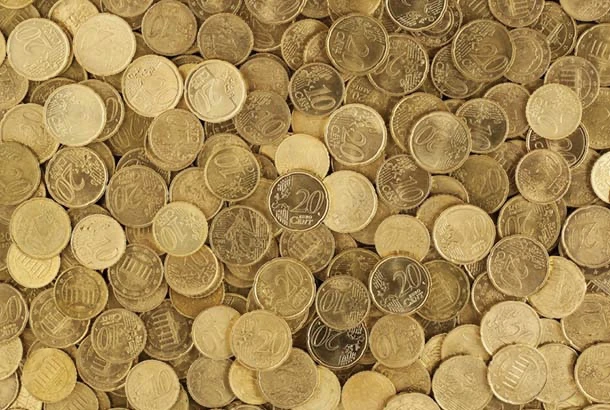
However, the rise of paper spelled the end of gold as a most valued trade resource, as it became more desirable than the gold it promised.
For an alternative perspective on the evolution of money, check out this post by other GIS authors; and check out this post for an idea of what the future could look like for paper and gold in an age of technology.
Read more about the role of the bartering system in monetary history here.