

The term socialism is a huge umbrella term referring to political, social and economic systems. It covers a wide range of topics that in turn, branch out into even more detailed subtopics. In this blog post however, I am going to talk about socialism as an economic system, continuing the series on economic systems.
The History of Socialism
In the 19th century, Capitalism became a dominant economic system throughout Europe and America, and various thinkers began to ponder alternative ways to run economies. 1864 was an important date for the development of modern socialism. This was when various worker and trade unions across Europe met in London to discuss and propose new philosophies and theories to replace capitalism. They soon discovered that they all had very different ideas.
In 1868 the “International,” as the event was called, took place in Geneva. By that time the International was split into two camps; one led by Marx and the other by Bakunin, both proposing alternative (yet socialist) ways to run economies and societies. Those who supported Bakunin were named “Collectivists,” which meant that they wanted all means of production to belong to the state and for workers to be paid based on how much they contributed to the production of the goods.
In contrast to Bakunin’s Collectivists, the Anarcho-Communists believed that workers should all work and contribute to the same stockpile, INCLUDING the goods the collectivists would give to the workers.
In later years there would be an emergence of various socialist groups across the world, popping up in America, Canada, Australia, Russia, Spain, Italy and many other countries.
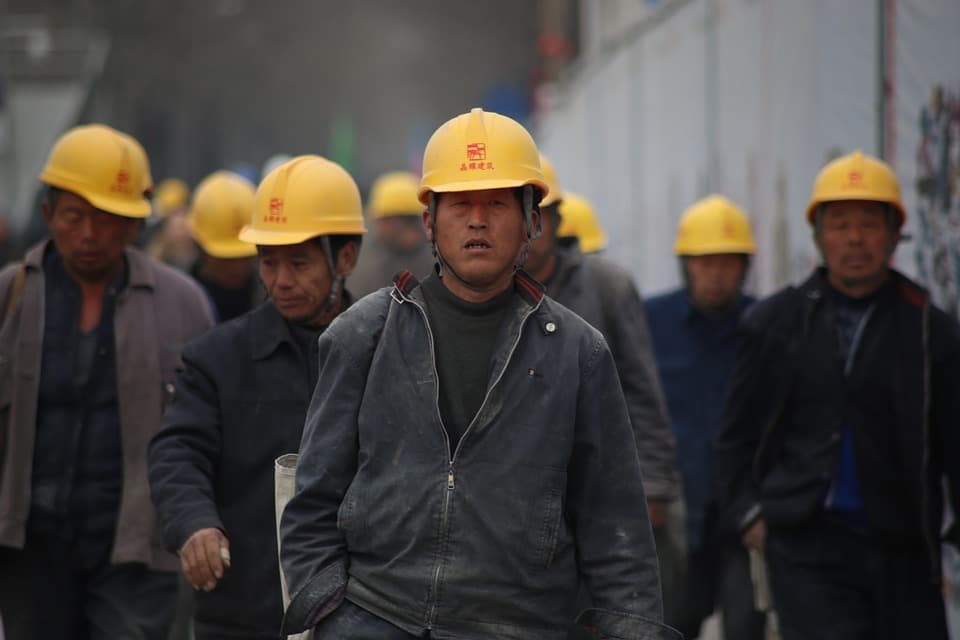
What is Socialism? A Simple Explanation
Socialism as an Economic System
One of the key aspects of Socialism, in an economic sense, is the idea of “Economic Planning,” where the manufacture, pricing and distribution of resources is managed by the state, and the quantity is based on providing everyone with goods. Assuming that all the calculations are correct (in an ideal world that is), then the supply and demand of goods will be balanced, providing a fair, uniform price of goods in the society. This, in turn, would mean that everyone has to work for the same reward (the factory worker and the bus driver would both need to earn enough money to pay for the same loaf of bread rather than one of them buying cheaper or more expensive bread).
A good example of a planned economy would be the economic system in the Soviet Union, where a planning agency would handle the balancing and regulation of goods available in the market. This would, however, cause problems with goods already produced that have been withheld from the market and therefore degrading in quality. An example of this were the furs collected by Siberian hunters. Instead of being sent to the market, these were housed in warehouses for a few years, after which they would rot and decay due to not being treated and prepared for long term use.
In conclusion, the general idea of Socialism is to ensure everyone works towards a common goal and is compensated for their effort in some manner. The philosophy becomes more diverse when we consider the goal, the methods and the compensations for the workers.
There are of course, many other ways you can find out about Socialism such as this article.
This is the second post in our three-part series on Economic Systems.
Check out the previous post in this series: “What is Capitalism? A Simple Explanation” to learn how capitalism differs from socialist economic systems.